Growth is not always a sales problem.
Growth can look like the answer to almost everything.
More leads.
More products.
More people.
More marketing.
More hours.
But when a business already feels stretched, more activity can make the wrong problem bigger.
The Business Growth Blueprint used within The Growth & Profit VIP Day starts with a more useful question:
What is making growth harder than it needs to be?
It looks at recurring business traps, the small improvements that can compound when repeated, the data that actually moves the dial, and three practical ways to grow using the numbers in your own business.
This article gives you a practical look at those ideas. The aim is not to promise a dramatic transformation. It is to help you spot the pressure points worth examining before you add more.
1. You are operating without a real plan
A plan does not need to be a long document.
It does need to make priorities visible.
If the team cannot explain what matters most this quarter, what success should look like and what is deliberately not a priority, the business can stay busy without moving particularly far.
2. You are trying to be all things to all people
More customers are not automatically better customers.
A service business can become overloaded by taking on work that does not fit its strengths or commercial model.
A product-led business can spread itself across too many products, audiences or channels.
Customer fit and clear value matter because growth gets harder when every sale creates a different business to deliver.
3. You do not understand the numbers well enough
This is broader than knowing the bank balance.
Useful numbers should help you understand revenue, cash, gross profit, operating profit and the productivity or capacity behind them.
The point is not to turn every owner into an accountant.
It is to make the numbers good enough to support a decision.
4. The owner is still trying to play every role
Many growing businesses reach a point where the owner is still acting as expert, manager, salesperson, problem-solver and final decision-maker.
That can work for a while.
Then it becomes the bottleneck.
Growth often requires a change in the owner's role, not simply more effort from the same person.
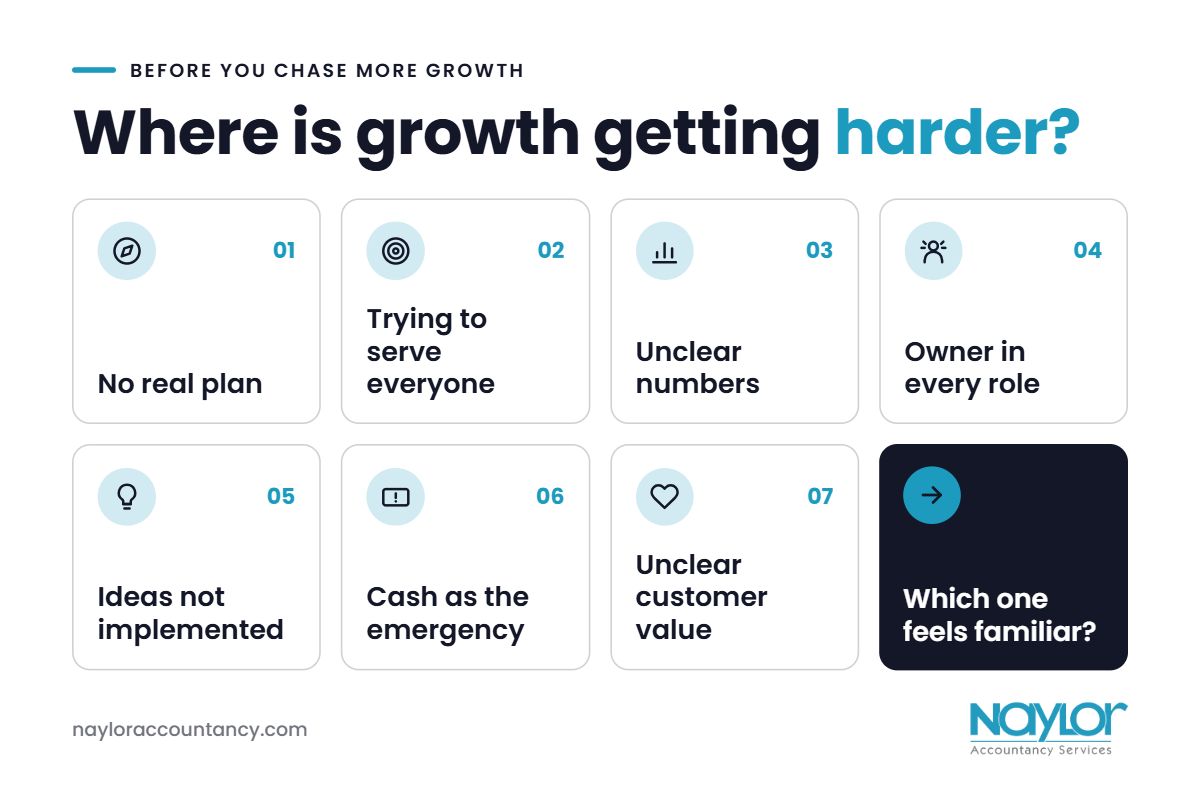
5. Good ideas are not being implemented
A business can have strong meetings and sensible plans yet still repeat the same conversations.
Implementation needs ownership.
Who is doing what?
By when?
When will progress be reviewed?
Without that discipline, even a very good idea can become another note on a page.
6. Cash keeps becoming the emergency
A business that repeatedly runs short of cash does not necessarily have one simple cause.
It may be timing, margin, debtor collection, stock, pricing, overheads or poor visibility.
This is where the Blueprint connects naturally with Profit First and the Money side of the NAS Signature System.
The point is not to treat cash as an isolated symptom.
7. You are not clear enough about customers and what they value
A business can grow revenue while drifting away from the customers it is best placed to serve.
Ask what your strongest customers actually value.
What problem are they paying you to solve?
What makes them choose you again?
The clearer that answer becomes, the easier it is to make decisions about marketing, pricing, service design and where growth should come from.
Three growth levers, the right data, and one action
The seven areas above are not a scoring exercise designed to make owners feel they are doing everything wrong.
They are prompts for recognising where growth may be getting harder than it needs to be.
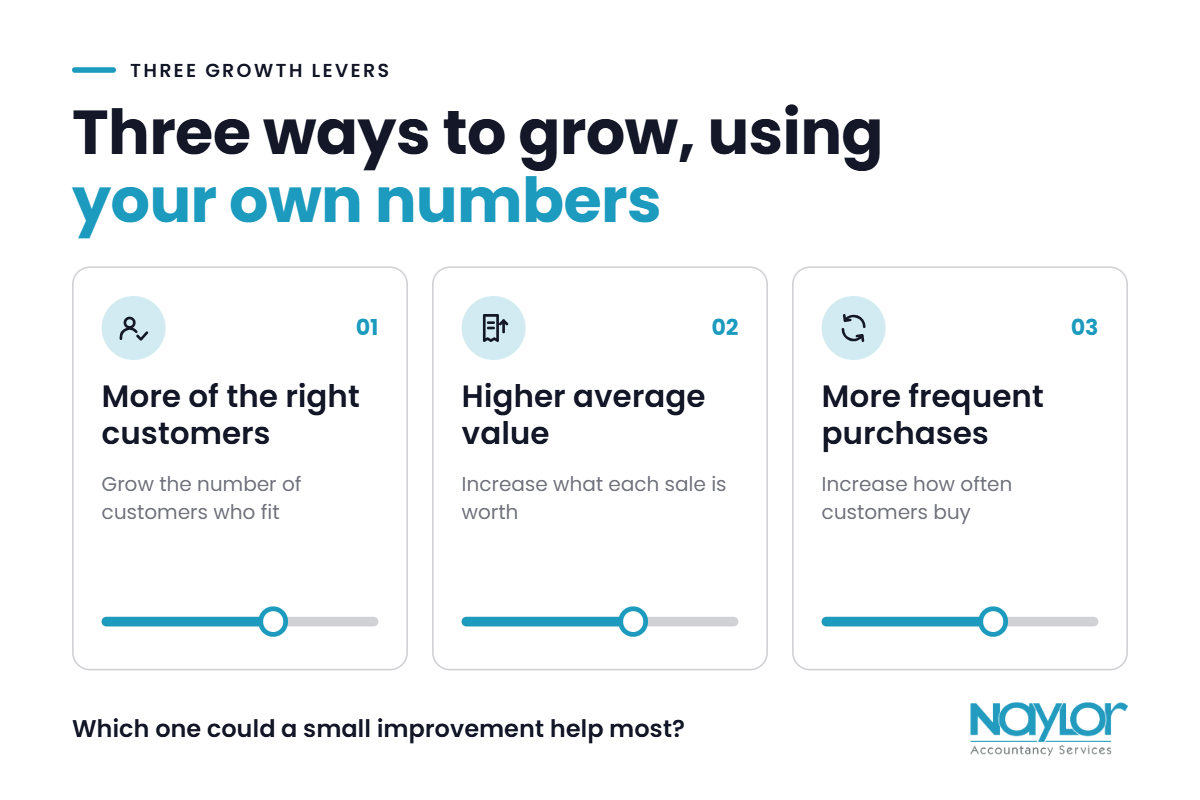
Once you understand where the friction sits, the Business Growth Blueprint moves into three practical growth levers:
- increase the number of the right customers
- increase average transaction size or value
- increase the frequency customers buy
The useful part is applying your own numbers.
What would a realistic improvement in one lever mean for your business?
Which data would tell you whether it is working?
What action will you actually take?
That is where the Power of Tiny Gains becomes useful. Small improvements matter when they are repeated, measured and connected to a real action.
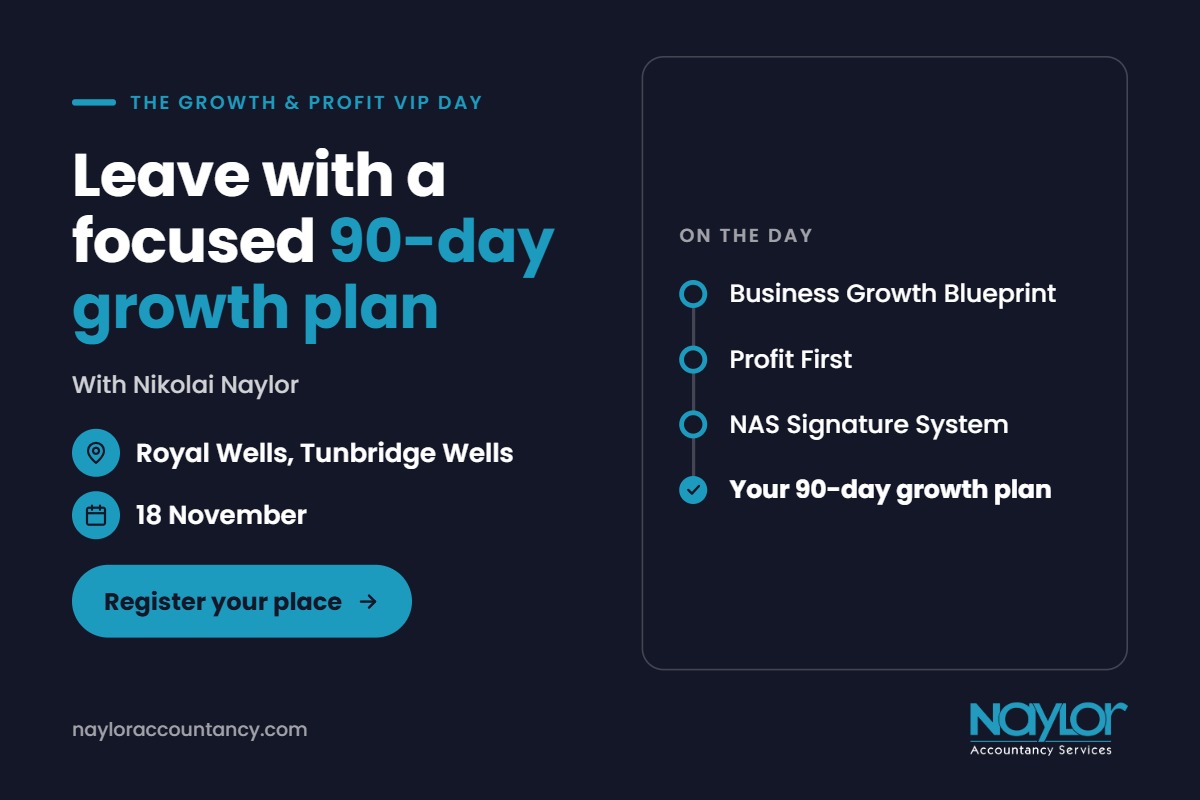
At The Growth & Profit VIP Day, Nikolai Naylor will take the Blueprint thinking further alongside Profit First and the NAS Signature System, before the day finishes with a focused 90-day business growth plan.
The VIP Day is available at this event.
📍 Royal Wells, Tunbridge Wells
📅 18 November
Register your place here.
If one of the pressure points in this article is already familiar, your usual Naylor Accountancy Services contact can also help you continue the conversation.
Main office: 01892 807 001
Email: [email protected]