A business can look healthy from the outside.
Work is coming in. Invoices are going out. The team is busy.
Yet cash can still feel tighter than expected.
That can be frustrating because revenue is one of the easiest figures to notice. When sales are growing, it is natural to expect the business’s financial position to feel stronger too.
However, revenue and cash flow tell you different things.
Revenue shows what the business has sold or earned. Cash flow shows when money actually enters the business, when it needs to leave and where pressure may be building in between.
Looking at revenue alone can therefore hide important financial pressures.
Why revenue alone does not provide enough visibility
A service business may be delivering plenty of work while customers pay invoices later than the dates on which payroll, suppliers and other commitments fall due.
A product-led or e-commerce business can face a different timing challenge. Cash may already be tied up in stock, fulfilment and supplier payments before the related sales turn back into available cash.
Margin matters too.
More sales do not automatically mean more profit. If additional work is underpriced, expensive to deliver or creating too much unpaid activity around the edges, revenue can increase without producing the return the business needs.
That is why a busy period can still leave a business owner wondering where the money has gone.
Four areas to review when cash feels tighter than expected
1. Timing
Compare when you expect money to come in with when payroll, suppliers, tax and other commitments need to be paid.
A business may be profitable on paper but still experience pressure if income arrives after major payments are due.
2. Margin
Consider whether the work, products or customers generating your revenue are producing enough profit after the full cost of delivery.
This includes costs that may be easy to overlook, such as additional administration, rework, delivery time and other unpaid activity.
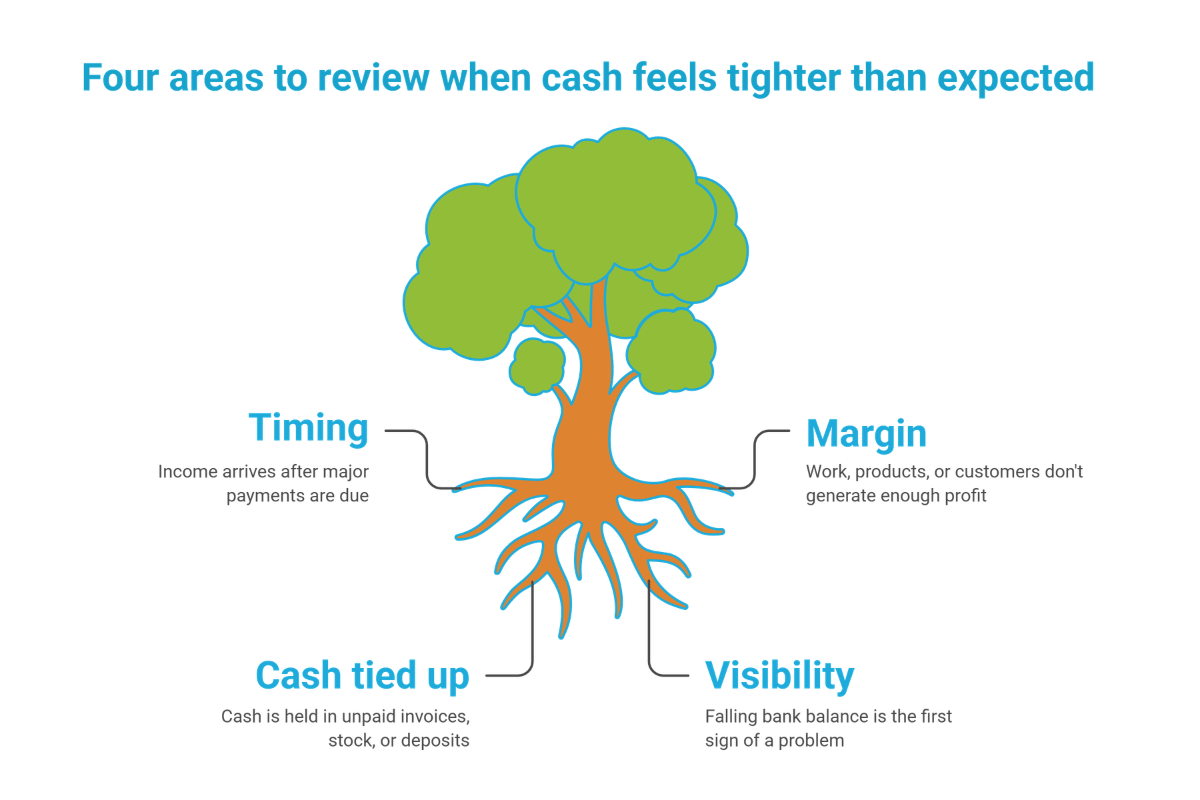
3. Cash tied up elsewhere
For some businesses, cash is tied up in unpaid invoices. For others, it may be held in stock, work in progress or deposits and supplier payments made before the related income is received.
Understanding where cash is tied up can help you identify which part of the operating cycle deserves attention.
4. Visibility
If a falling bank balance is the first sign of a problem, you may be seeing the pressure too late.
Better cash visibility helps you understand what is likely to happen before the situation becomes urgent. A cash flow forecast and timely management information can support earlier, better-informed decisions.
Profit deserves deliberate attention
Profit is worth understanding and managing deliberately. It should not simply be treated as whatever happens to be left after everything else has been paid.
This does not mean that every owner should take money from the business in the same way. The appropriate approach will depend on the business and its circumstances.
What matters is understanding how the business creates value, where it makes margin and whether the effort, risk and responsibility involved are producing a worthwhile return.
This is where the Profit First approach can support the conversation. It encourages business owners to make profit and cash part of regular financial management rather than considering them only at year-end.
One practical check to complete this week
Review your cash flow forecast, if you have one, or prepare a simple list of the money you expect to receive and the commitments you need to pay.
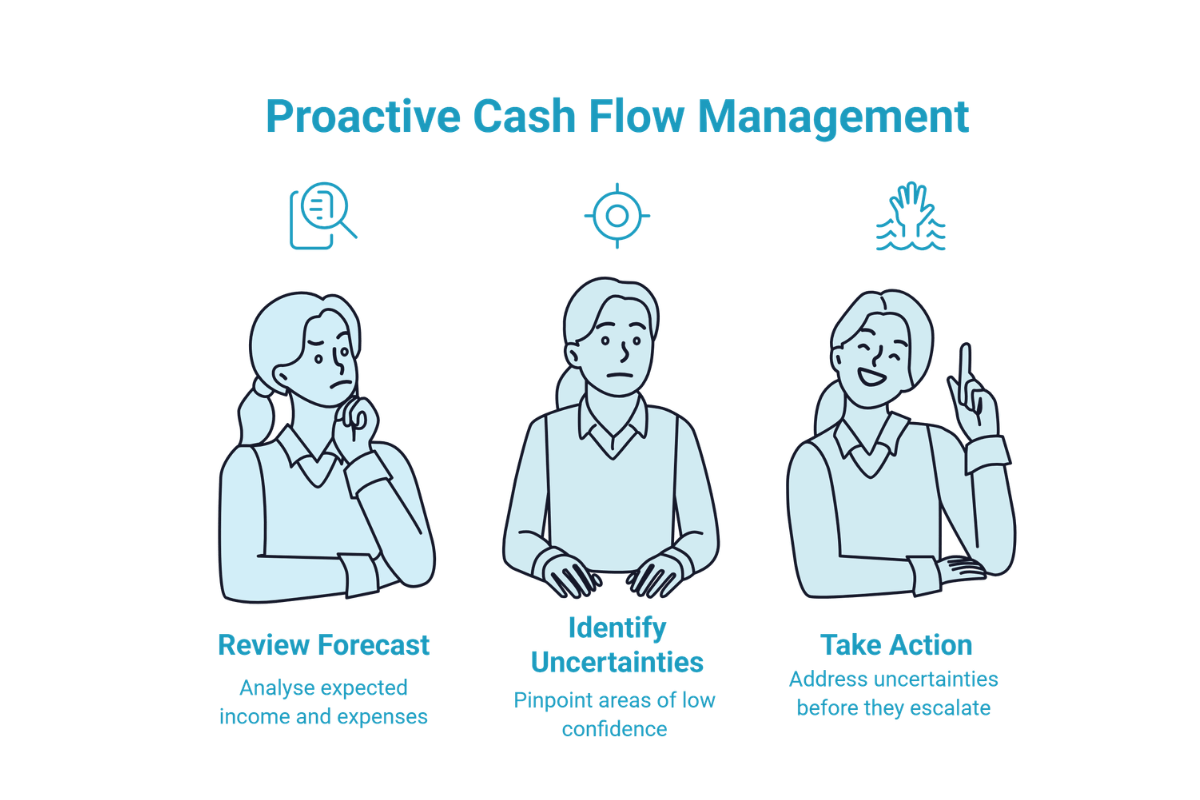
Then ask yourself:
- How much money do I expect to come in over the next few weeks?
- What expenditure is already committed?
- Which part of this picture am I least confident about?
The third question may be the most useful.
It can point you towards the information, decision or action that deserves attention before an issue becomes urgent.
Can revenue grow while cash flow gets worse?
Yes.
Revenue measures what the business has sold or earned, while cash flow reflects when money actually enters and leaves the business.
A growing business can therefore experience cash pressure if customers pay slowly, costs have to be paid earlier, stock absorbs cash, margins are too low or growth creates additional payroll and delivery costs before the related income arrives.
The important question is not simply whether revenue is increasing. It is whether the business is generating sufficient profit, how that growth is affecting cash and when the cash becomes available.
Give these questions dedicated attention
If these questions are difficult to answer from your current figures, dedicated time away from the day-to-day demands of the business can help.
The Growth & Profit VIP Day gives business owners focused time to explore cash flow, margin, profit and future priorities.
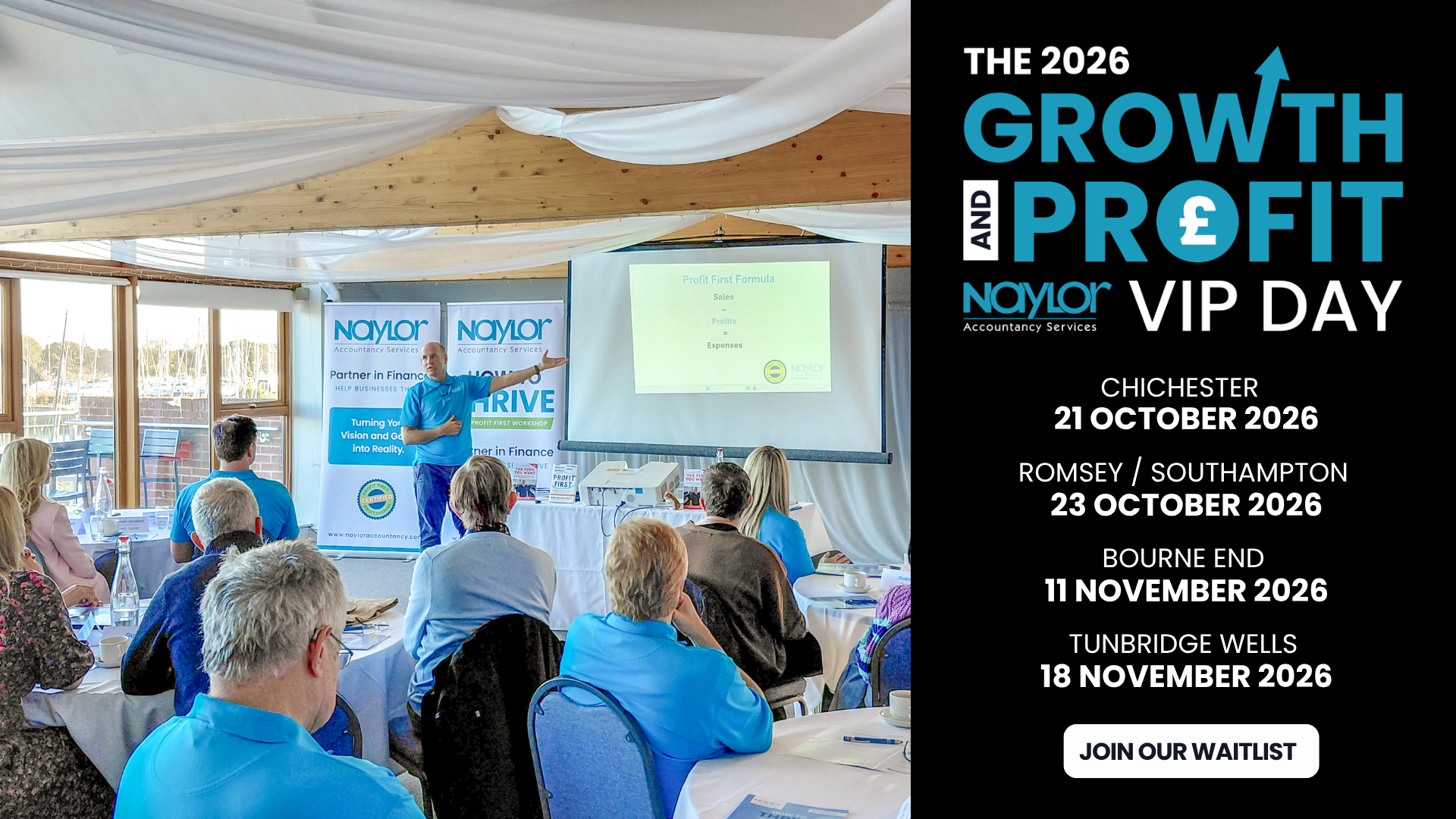
Profit First forms a key part of the day. We also use the NAS Signature System to consider Money, Business and Structure, supported by the Business Growth Blueprint and practical discussions around:
- The Power of Tiny Gains
- The seven big mistakes business owners make
- Three ways to grow a business
Most importantly, the session brings this thinking together into a focused 90-day business growth plan, helping you leave with clearer priorities and a practical direction for what to address next.
Choose your location
The Growth & Profit VIP Day - Chichester
📍 Chichester Yacht Club
📅 21 October 2026
The Growth & Profit VIP Day - Romsey/Southampton
📍 Kimbridge Barn
📅 23 October 2026
The Growth & Profit VIP Day - Bourne End
📍 The Odney Club
📅 11 November 2026
The Growth & Profit VIP Day -Tunbridge Wells
📍Royal Wells
📅 18 November 2026
Places are limited to help keep each session small, practical and useful.
Step away from the day-to-day, review the bigger picture, and focus on the structure, decisions, and priorities that could support stronger growth and profitability.
Register your interests here: The Growth and Profit VIP Day 2026 | Naylor Accountancy Services
If you would prefer to begin with a conversation about cash flow, profitability or management information, your usual Naylor Accountancy Services contact can help you work through the issue directly.
Telephone: 01892 807 001
Email: [email protected]